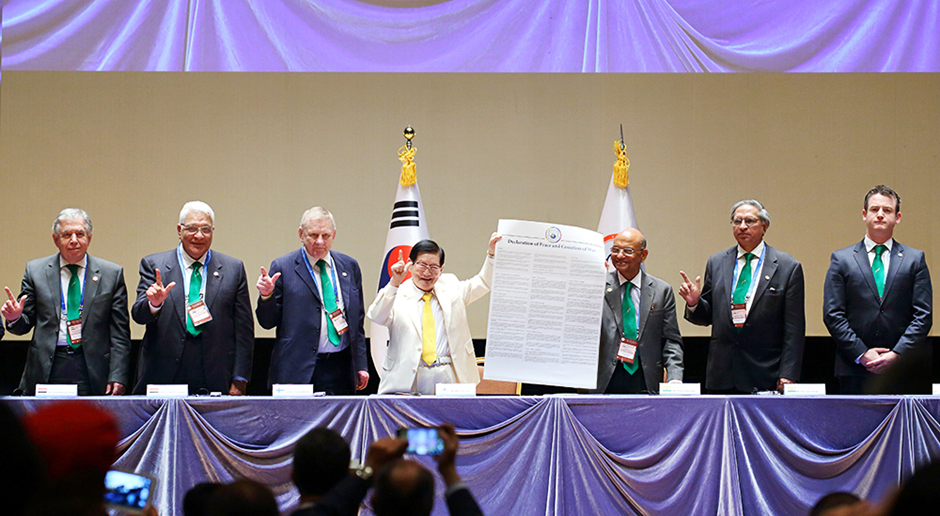
On 14 March 2016, the Declaration of Peace and Cessation of War (DPCW) was proclaimed. The document was proposed to establish shared standards for the prevention of war and the peaceful resolution of disputes in an international environment where wars and conflicts continue to recur.
The DPCW began with the recognition that countless youth are sacrificed in wars. Rather than managing conflicts after they arise, the declaration presents a direction for structurally preventing conflicts and institutionalizing cooperation.
As the DPCW marks the 10th anniversary of its proclamation, the support and engagement over the past decade have gradually expanded the foundation for implementing the standards it proposed.
HWPL Founded on the Experience of War
Heavenly Culture, World Peace, Restoration of Light (HWPL) is an international peace NGO established to protect lives lost in war and to build a sustainable peace order.
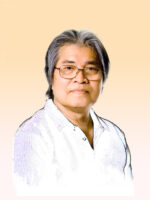
The background of its founding lies in the wartime experience of the chairman, Man-hee Lee. As a student soldier during the Korean War, he experienced firsthand the devastation of war. The conviction that youth should no longer be sacrificed in war became the starting point for HWPL’s establishment.
Since then, HWPL has built an international network connecting politics, religion, and civil society, and carried out discussions on the implementation of international law for peace, peace education, and interfaith cooperation. The DPCW is a proposal for international norms prepared as part of these efforts.
September 18th HWPL World Peace Summit and International Consensus
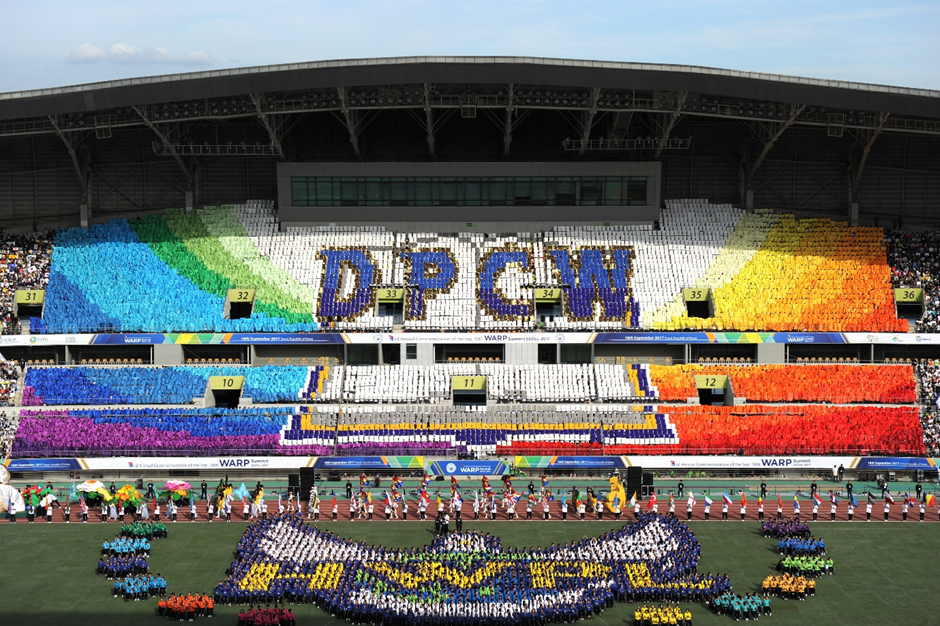
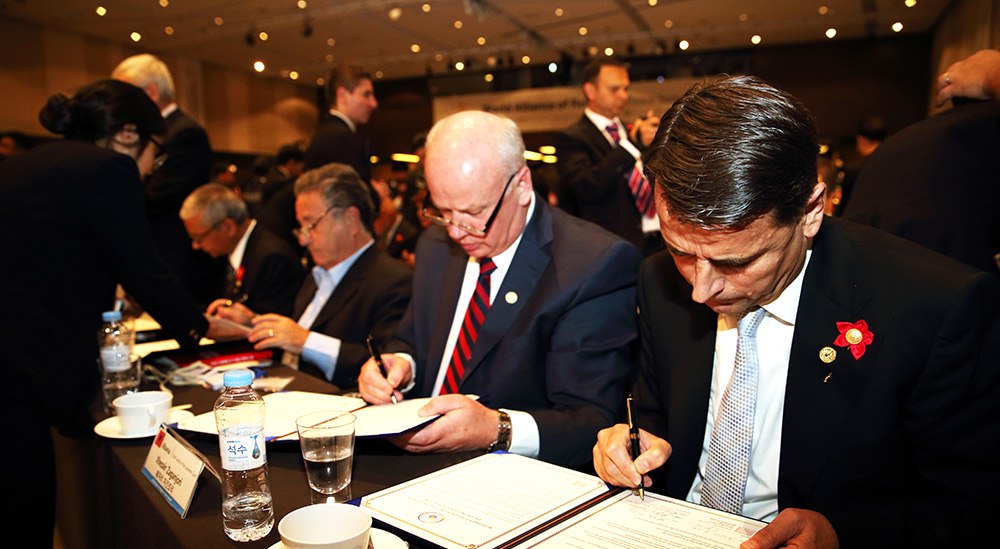
The DPCW began with the September 18th HWPL World Peace Summit held in Seoul on 18 September 2014. A total of 1,933 participants from 152 countries attended, including former and current heads of state, government officials, religious leaders, international law experts, and representatives of civil society. The key issue raised at the conference was clear: merely responding after conflicts arise is not enough to prevent the recurrence of war.
Accordingly, a consensus was formed that international standards are needed to prevent conflict and institutionalize collaboration. In 2015, HWPL launched the HWPL International Law Peace Committee (ILPC), composed of international law experts from around the world. Through legal review and consultation, the committee completed drafting the DPCW, consisting of 10 articles and 38 clauses, which was officially proclaimed on 14 March 2016.
Key Contents of the DPCW
The DPCW consists of a preamble and 10 articles with 38 clauses. Although it is based on the fundamental principles of existing international law, it has a more detailed articulation of mechanisms for preventing war and strengthening cooperation.
The DPCW includes the following:
• Establishing international standards regarding the use of force
• Codifying procedures for peaceful resolution of conflicts
• Strengthening the principles of international cooperation and collective security
• Guaranteeing freedom of religion and promoting interfaith collaboration
• Expanding a culture of peace and encouraging civil participation
The DPCW is not a document intended to replace the existing international legal order. Rather, it focuses on complementing and strengthening the agreed-upon principles of international law so that they can operate effectively in practice.
It is also meaningful in that the declaration aims to broaden the foundation for implementing international norms by including the roles of various actors, such as religious communities and civil society, beyond a state-centered legal framework.
10 Years of Expansion and Accumulation
Since the proclamation of the DPCW, endorsements continued to emerge from international organizations and national legislatures. Several regional parliamentary bodies, including the Pan-African Parliament (PAP), the Central American Parliament (PARLACEN), and the Latin American and Caribbean Parliament (Parlatino), have adopted resolutions in support of the DPCW. Recently, the Chamber of Deputies of Paraguay, the Senate of the Dominican Republic, and the National Legislature of South Sudan have also adopted resolutions endorsing the DPCW.
Support has expanded at the civil society level as well. Approximately 900,000 endorsements have been collected from citizens in 178 countries. This demonstrates that norm diffusion is taking place not only through state diplomacy but also through civil society.
Such trends show that the DPCW has moved beyond a mere declaration and has gradually expanded its foundation for implementation through ongoing discussions with the international community and civil society.
The Path Going Beyond the Era of War: Writing Peace into Law
For a long time, humanity has often ended conflicts through war. The pattern of determining order through superiority of power has been repeated.
A civilizational transition lies in changing this structure—moving away from resolving conflicts through war toward resolving them through law, agreement, procedures, and cooperation. Conflicts may not disappear, but the means of resolving them can change.
The DPCW clarifies standards regarding the use of force, establishes procedures for dispute resolution, and incorporates the roles of religion and civil society within the institutional framework. This represents an effort to strengthen structures that prevent conflicts from escalating into war.
The past decade has been a period of advancing this proposal within the international community and accumulating institutional and social foundations. The task ahead is to consolidate this accumulation. International norms must be strengthened so that conflicts do not escalate into war, and a structure must be firmly established in which states and societies share responsibility.
“What Path Should Humanity Take?”
Not toward a path where war remains a means of addressing conflict, but toward one in which peace is chosen and gradually accumulated over time. Conflicts may persist, but the means of resolving them can change. The DPCW represents an effort to give this transition a concrete institutional framework.